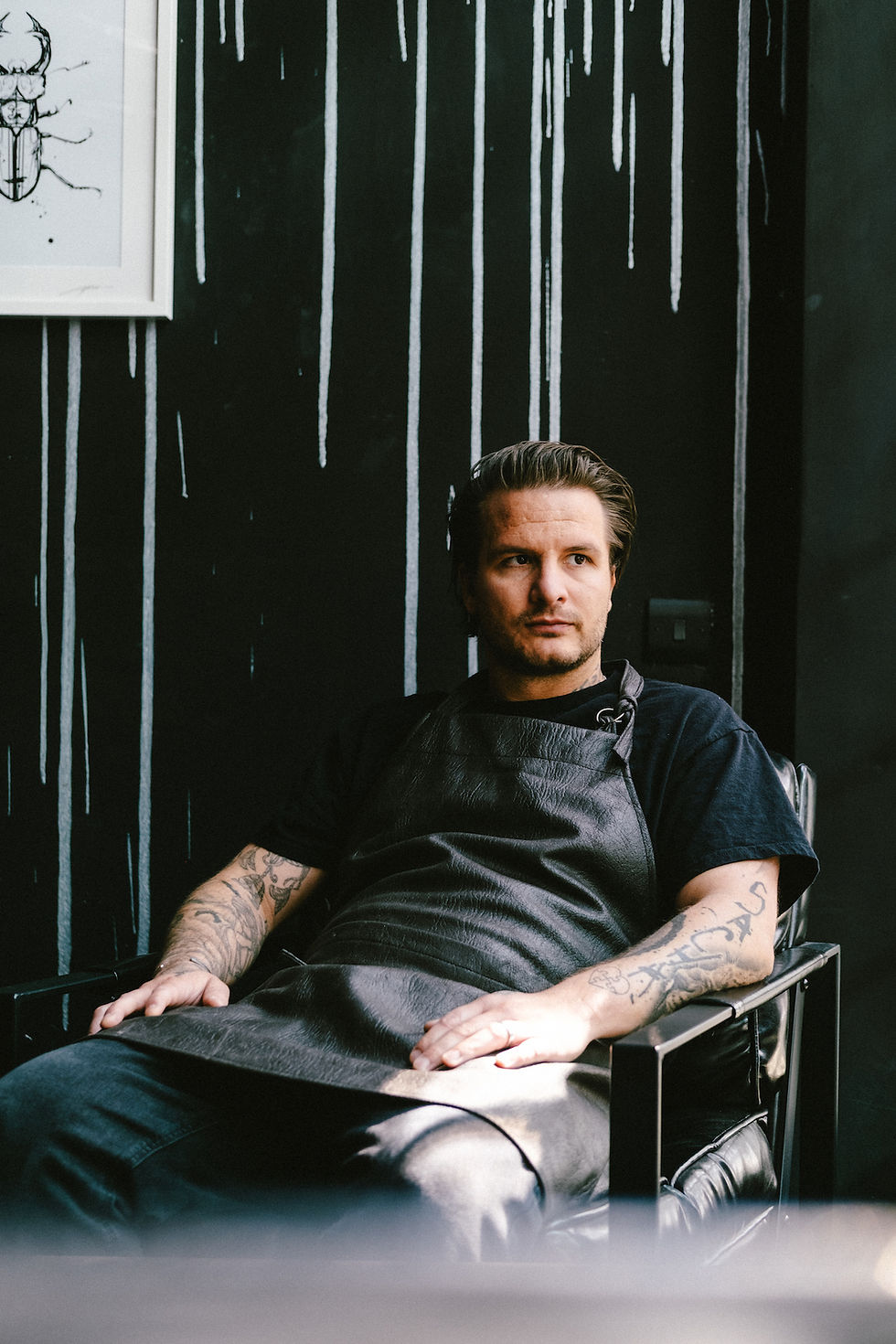
Food, Family and Fish and Chips: A conversation with Head Chef Leo Kattou, The Bower House

At The Bower House, Head Chef Leo Kattou is quietly building one of the’ most compelling modern British dining destinations. Raised in Coventry within a Cypriot-Greek family and shaped by 14 years at Michelin starred Simpsons under Luke Tipping, Kattou’s cooking blends classical precision with warmth, generosity and a deep respect for produce.
In this conversation with The Knife, he reflects on family, mentorship, Greek identity, kitchen culture and why truly great restaurants are measured not only by what’s on the plate, but by how people feel when they leave.

You started cooking at 15 in your family’s fish and chip shop in Coventry. When you look back now, what lessons from that environment still shape the way you cook and run a kitchen today?
Starting in my family’s fish and chip shop at 15 taught me consistency, speed and a strong work ethic. It also gave me an appreciation for simple food done well and showed me the importance of teamwork and communication in a busy kitchen.
You spent 14 years at Simpsons under Chef Luke Tipping, an unusually long apprenticeship in modern kitchens. What did that longevity teach you about craft, patience and the slow building of a culinary identity?
Spending 14 years at Simpsons under Chef Luke Tipping taught me the value of patience and consistency. It showed me that developing real craft takes time, you can’t rush it. That longevity allowed me to refine my skills, understand ingredients more deeply and gradually build my own style rather than forcing it. It gave me a strong foundation and the confidence to know who I am as a chef.
Becoming head chef of a Michelin starred restaurant at just 26 is a huge responsibility. At that moment, what did leadership suddenly mean to you that it hadn’t before?
Becoming head chef at 26 made me realise leadership isn’t just about cooking, it’s about responsibility for the whole team and the standards you set every day. It shifted my focus from my own performance to supporting others, creating consistency and leading by example. Having the support of Luke Tipping was huge as well, it gave me confidence and guidance, and showed me the kind of leader I wanted to be.
You’ve spoken about restaurants being built on shared values and mutual respect. What does a healthy, high-performance kitchen culture actually look like in practice at The Bower House?
For me, a healthy, high-performance kitchen culture at The Bower House is built on respect, consistency, and clear communication. Everyone understands their role, supports each other, and takes pride in what they do. It’s a focused environment, but also a positive one, where people feel valued, can speak openly and are given the chance to grow. When you get that balance right, the standards stay high and the team pushes each other in the right way.
Your cooking now blends classical British technique with Mediterranean and Greek influences. Are there particular flavours, dishes or memories from Cyprus that quietly find their way onto the menu?
Yes, definitely – there are always subtle influences from Cyprus in my cooking. It’s often the flavours more than specific dishes, things like fresh herbs, citrus, olive oil and simple, ingredient-led combinations. A lot of it comes from memories of eating with family, food that’s generous, seasonal and full of flavour. That influence naturally finds its way onto the menu, even if it’s not always obvious.
After years inside a Michelin kitchen, you took time away to reconnect with Cyprus. What did that pause give you creatively that constant momentum in restaurants sometimes prevents?
Taking that time away gave me space to reset and think more clearly about my cooking. In a busy kitchen, you’re constantly moving, so you don’t always get the chance to reflect. Being in Cyprus helped me reconnect with flavour, simplicity, and why I cook in the first place. It brought a bit more clarity and calm to my approach, which definitely comes through in the food now.

You’ve described yourself as the "middleman between great ingredients and the guest". How does that philosophy influence the way you approach menu development at The Bower House?
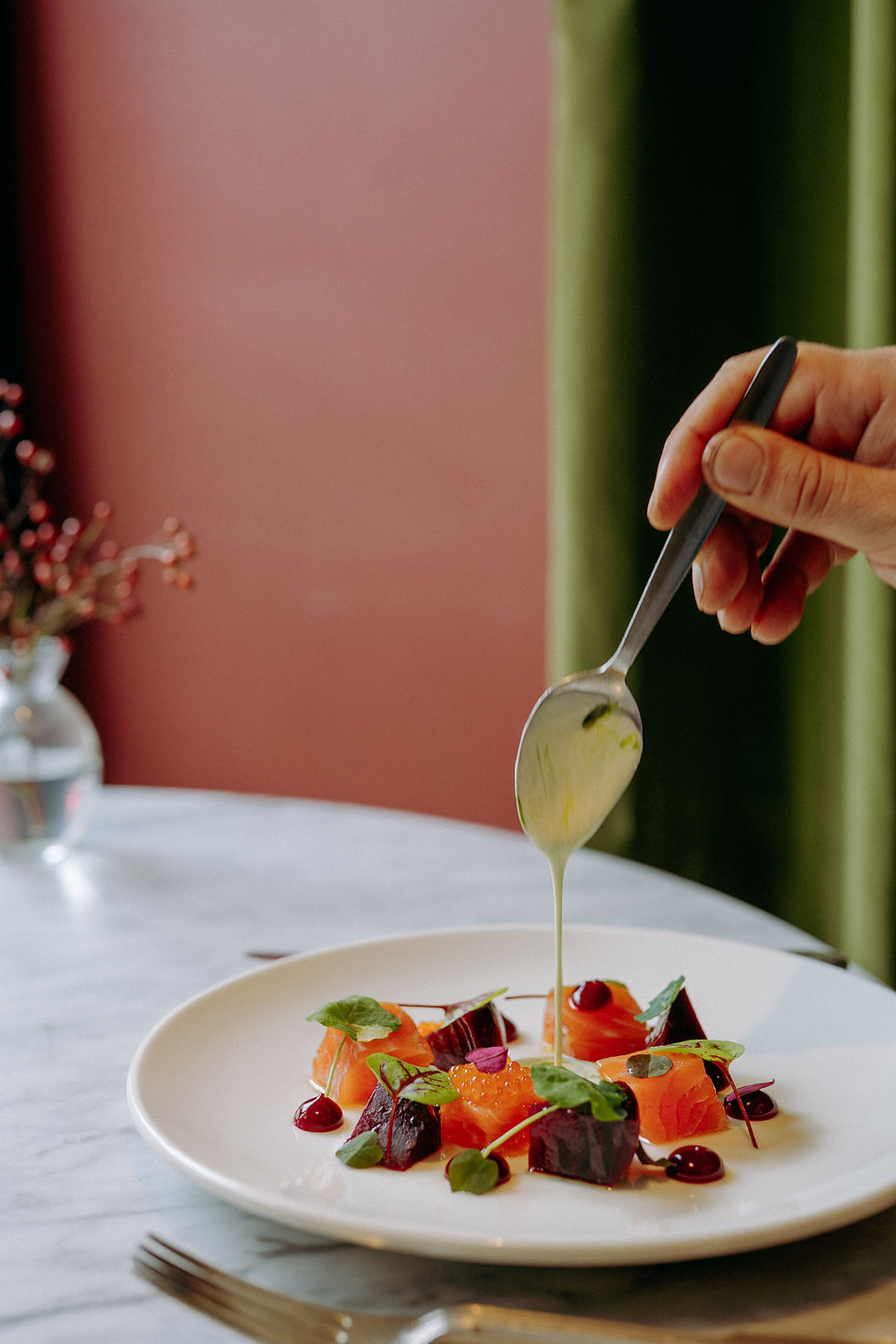
Seeing myself as the middleman keeps the focus on the ingredients rather than overcomplicating things. When developing menus, it’s about sourcing the best produce possible and treating it with respect – letting it speak for itself. It also means thinking about the guest experience, creating dishes that are clear, balanced and enjoyable, rather than overly technical. The goal is to bridge that gap between ingredient and guest in the most honest way possible.
Shipston-on-Stour isn’t a major city dining destination. What excites you about building serious cooking in a market-town setting rather than a metropolitan one?
What excites me is the freedom and connection to the local community. In a market-town setting like Shipston-on-Stour, you’re not chasing trends or city pressure, you’re focused on building something consistent and meaningful for the people who actually come through the door. It also pushes you to earn every guest, every visit, through quality and hospitality. There’s something very rewarding about creating serious cooking in a place where people might not expect it and seeing it become part of the town’s identity.
Many chefs talk about seasonality, but the interpretation can vary wildly. For you personally, what does cooking "in season" actually mean on a plate?
For me, cooking in season means building dishes around what’s at its absolute best at that moment, not forcing ingredients to fit. It’s about letting produce naturally lead the direction of the menu. On the plate, that translates to simplicity and clarity – less manipulation, more respect for flavour and timing. When something is in season, you don’t need to do too much to it; the quality does the work.

You’ve competed in competitions like MasterChef: The Professionals and won accolades such as the British Culinary Federation Chef of the Year. Did those experiences change how you think about cooking, or did they simply reinforce what you already believed?
They reinforced what I already believed, but they also sharpened my execution. Competitions force you to be precise, disciplined, and consistent under pressure, with no margin for error. Winning British Culinary Federation Chef of the Year was a huge inspiration for me. It was a real moment of validation and motivation to keep pushing myself. Overall, those experiences confirmed that strong fundamentals and attention to detail are what really matter, but they also refined how I work under pressure.
Mentorship seems important to you. Thinking back to your own early career, what advice or guidance made the biggest difference, and how do you try to pass that forward to young chefs now?
The biggest influence for me was being taught to focus on the basics and not rush the process. I was encouraged to be patient, consistent and to really understand what I was doing rather than just going through the motions. That stuck with me. Having great mentors – and still being able to speak to them now for advice – is a huge source of support. People like Luke Tipping, Andreas Antona, and Aktar Islam have all played a part in shaping my approach and that ongoing connection is invaluable. Now, I try to pass that on by being direct but supportive, setting high standards, but also giving young chefs the time and space to learn properly. Having strong relationships with both the Royal Academy of Culinary Arts apprenticeship and UCB has also helped, as they provide excellent structured pathways for developing the next generation of chefs.
In five years’ time, what would success here look and feel like? Both in the kitchen and in the dining room.
In five years, success for me would mean a kitchen and dining room that feel consistently confident, calm and well-run, with a team that’s growing and proud of what they do. In the kitchen, it’s about stability, strong standards and developing people properly so they can progress. In the dining room, its guests having a clear memorable experience that reflects the food, the service and the values of The Bower House as a whole.