
Breaking Fine Dining Rules in Birmingham: A conversation with Chef-Owner Kray Treadwell, 670 Grams

Birmingham’s most uncompromising chef, Kray Treadwell, isn’t interested in playing by the old rules of fine dining. At his Digbeth restaurant 670 Grams, the Michelin starred chef strips away the starch and ceremony, serving a bold, boundary-pushing tasting menu that nods to nostalgia, street food, and raw creativity. In this candid interview with The Knife, Kray opens up about his evolution as a chef, the realities of running a star-holding restaurant, and why he thinks the Michelin system is losing its edge.
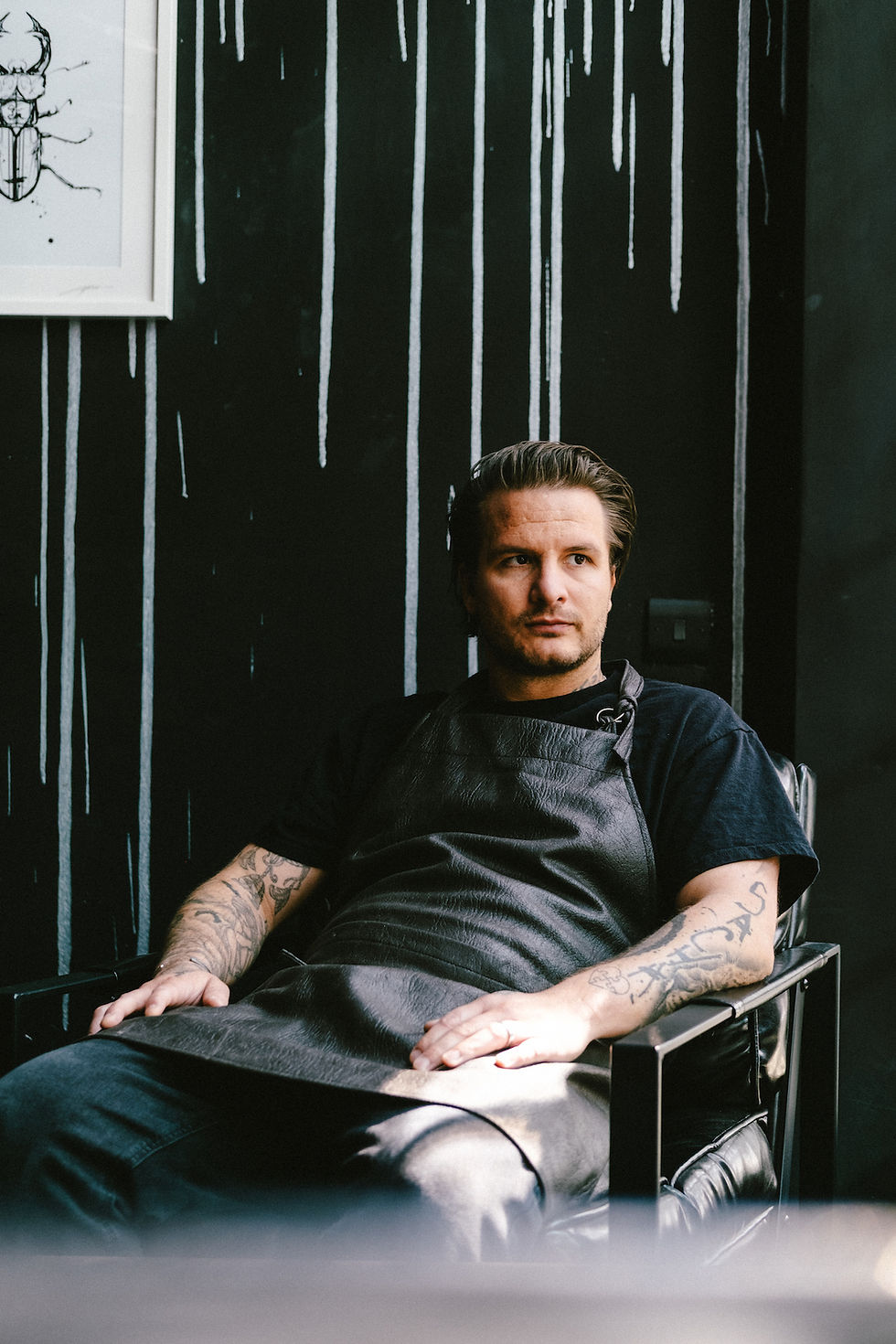
670 Grams has always defied convention, from the name to the plating. How would you describe the evolution of your food since you first opened, and where is it heading next?
I think when we first opened, we were trying to show off, using expensive ingredients and over complicating them. A bit of style over substance, probably making them look a bit more weird, and that would probably not come across as well in the flavour, whereas now I feel like we do less. We try to capture all the essences of the flavours that are actually on the plate rather than over complicating it.
We probably lacked confidence then and now we let the ingredients do the confidence. Basically, we've got loads better suppliers than when we first opened, and we have a real relationship with them now. We've been open for five years, whereas before we were only open for five minutes. So we've grown. We've grown with our suppliers, and I think that's what the biggest change is for us.
The current tasting menu is bold, playful, and unafraid to reference both fine dining and fast food culture. What inspires the specific combinations?
I feel like nostalgia is not a word that I use a lot, but it's a word that definitely people can relate to. If you can make someone, when they walk into the building, feel as comfortable as possible, and then also do that with the food, then I think it benefits. So I feel like the reason we do apply combinations on certain dishes is, one, because they're really tasty, and two, it's to make the guests feel comfortable.
You've been open about the pressures and mental strain of running a Michelin starred restaurant. Has that honesty changed the way you lead your kitchen or design your menus?
I don't think it has any impact, I've wanted this since I was 16. As you're growing up you see how you want your restaurant to be, how you want your kitchen to be, it's a constant thing. It's not just when you open, this is how it's going to be. I think it's a routine thing that you're conscious of all through your career. I don't think it's put any more pressure on on me or anything like that. I think it's just the way it is and how it's always going to be. I think you learn a lot when you open your business, when it is your kitchen. When we first opened, I probably wasn't the best person to work for, but I haven't spoken to anyone that owns a business that's got the balance right yet.

You’ve talked about wanting to make Michelin starred dining more accessible — both in tone and price. Do you think the star system is adapting fast enough to modern dining culture?
Can I be honest? I feel like, and this sounds hypocritical because obviously I won our Michelin star, but I think that there's too many now. I think anyone can have one, and it diminishes what it stands for. You know, you try and compare The Ritz to like a pub, right? And by each having a star you're saying that they're the same and it's not. Even if you say one star is just for the food, well, the food at The Ritz is not the same as the food at the pub. They're both delicious, but it doesn't mean that the pub deserves a Michelin star. It can just be a really good pub, you know? I mean, not everyone needs one. Obviously, everyone wants it, because you boost your business, but like anything, it becomes devalued.
There’s a strong narrative feel to your dishes, often laced with humour or nostalgia. How important is storytelling to your food? And what’s a dish on the current menu that best captures that?
I think it's really important, because everybody wants more now for their money. So I think if you are going to a fine dining restaurant these days, then you want an experience, and I think that's what you're selling now. You're not just selling the dinner anymore. In terms of dishes, I think it always has to be personal to you and the restaurant, so at the minute [at the time of interviewing] we have a dish on that's a sunflower seed brittle with a sunflower seed hummus, black garlic, and smoked caviar so it looks like a sunflower, and the reason for that is because it's the symbol for Hidden Disabilities. It's actually called 'the lanyard' on the menu, and that's because our son has autism, so we wanted to put out a sunflower for him.
Your time on Great British Menu gave a national audience a glimpse of your style. Did it change how diners perceive you, or how you see yourself as a chef?
I was a child when I went on that show, I was like 20. I was the youngest ever person to get to finals. It was that thing of being quite arrogant and being quite brash, and just trying to show off, and it didn't really capture any of the food that I would do now, really. So I think it's totally changed. Also, what you have to understand with that is it is a TV show, so you have to do food that looks aesthetically better than it tastes, because there's only four people that are trying it, but the audience at home can only see so you don't want to show the audience a boring plate of food that tastes really nice. They don't care because they're not going to try it unless they come to your restaurant and you have it on your menu. Would I go back on it if I were invited? I would love to go back on it, just because I feel like I've got more experiences and it could be a lot more personal now.

The name ‘670 Grams’ came from your daughter’s birth weight — a deeply personal marker. How has fatherhood influenced your outlook on food and the way you run your business?
Like I said, I didn't really believe in nostalgia, but it is a thing, man, and fatherhood does. It has helped me, in a sense of developing dishes. If I would have had a restaurant six or seven years ago, I wouldn't have had anything to grasp it to. It wouldn't have been called what it's called now. I wouldn't have had that lanyard dish on. We've had a dish on before, which was tea ice cream with burnt bread and a tea caramel, and it was basically to mimic when you have a baby, the first thing that the mum gets offered is tea and toast.
In an industry that’s notorious for long hours and burnout, how are you creating a different kind of kitchen culture for your team?
Need to be honest on this, but I think if you want to be at this level and in these kitchens, then you're gonna have to work hard and long. And that's just the way that it is. Especially with young chefs, you you've got to learn your trade, and you're not going to learn that by doing 35 hours a week and coming in at 10 because the person that's teaching you is not going to be interested in teaching you. You have to put the work in on the outside as well, and that's that's your free time; it's like for any exam it's down to you whether you get a good mark or an F – that's on you. You get taught that in school, but then when you come to work now, you you have to have a balance. So it's accepting it from the beginning, that this is where it's going to be. No one's forced it on you, it's a choice and it is hindering our industry. There's never been a lot of money in having a restaurant. You don't do it because you want to get super rich, unless you have a good break, like Jason Atherton. There's only a handful of big chefs that are millionaires. And that's not from just having a restaurant, it's from building an empire and being on TV.
You’re operating in Digbeth, a part of Birmingham known for its creative edge. How has the area and its energy fed into your identity as a chef and restaurateur?
The area has always been where we wanted the restaurant, and that is just because of our style and how we wanted the restaurant to be – it just fits so well with where we are. I used to come up here when I was a kid, when I was 17 and working at Purnell's, I used to come up here after work every Saturday, and now that I have a restaurant here it's quite special.

What role does music, art or other forms of culture play in how you develop dishes or design the restaurant experience?
I think it all helps. You can only take a certain amount of inspiration from food, because ingredients are just ingredients, aren't they. You can do a tomato salad but then you need to make that tomato salad stand out, so people want to come and try your tomato salad, and I think you get that from creative visions and art, and stuff like that. It all plays into one.
You've said before that you "don’t want the experience to feel stuffy." What are the specific rituals or details at 670 Grams that help break down those traditional fine dining barriers?
What we do here, which is amazing, is that we treat everyone differently. You've just had a baby, right? So you going out with your wife for dinner now is going to be quite special, because you're not going to be able to do it as often. So the last thing you want is someone coming over to you every two minutes explaining a dish of food, or pouring your water, or telling you about this wine. Then you're spending less time with your wife. You might want us to put the food down, explain it quickly, we're going to give you this bottle, it's going to go with everything, and you're going to speak to your wife. Whereas some people that come will want all of that, so I think understanding the guests and what they want is so important.
Looking ahead, what excites you most — whether that’s a new concept, a side project, or just a shift in the way people are thinking about restaurants post-2020?
What excites me the most is just feeding people and seeing their reaction. How the restaurant's laid out, you can see all the tables from the kitchen. When you see empty plates, everyone enjoying it, then it makes it worth it.


