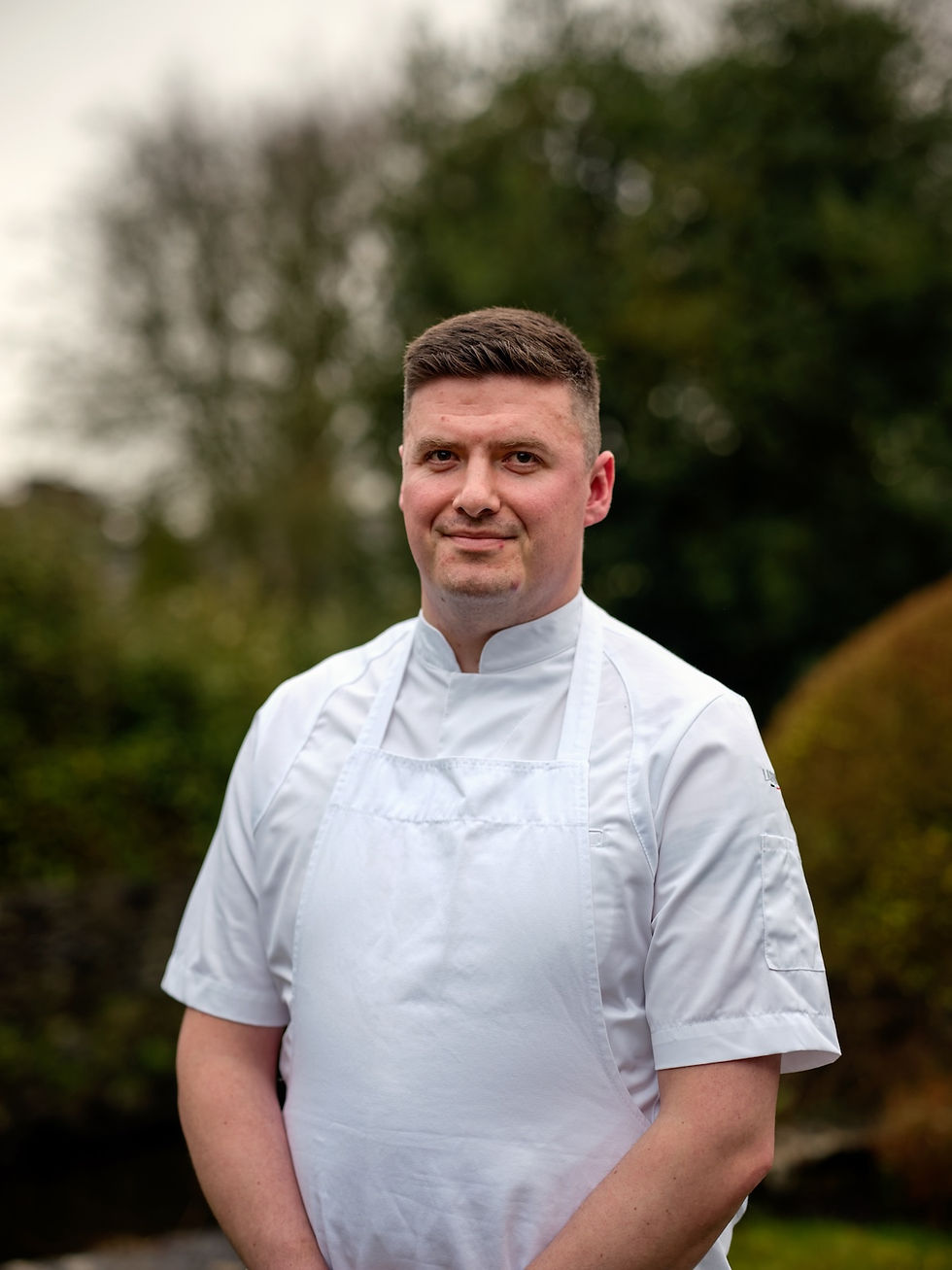
Ambition and Evolution: A conversation with Head Chef Simon Ulph, Rothay Manor

Simon Ulph has worked in some of Britain’s most celebrated kitchens, from The Ledbury and Northcote to The Gilpin and The Stafford, where he helped secure a Michelin star alongside Michael Caines. But rather than continue chasing London’s bright lights, the chef chose family, Cumbria and a new challenge at Rowan, Rothay Manor.
Now leading the kitchen at the Lake District hotel, Ulph is bringing Michelin-level precision to a more relaxed style of dining, built around exceptional local produce and influences spanning classical French cookery through to Japanese restraint. The Knife caught up with him to discuss leaving London, life in the Lakes, the changing face of fine dining and why a busy restaurant matters more than accolades.

You left London just months after helping The Stafford secure a Michelin star. For many chefs that's the dream destination, so what was the conversation you had with yourself that ultimately convinced you to walk away from it?
Helping The Stafford achieve its Michelin star is something I'll always be incredibly proud of, but ultimately I chose my family. The opportunity to run my own kitchen in the Lake District was too good to ignore. We were expecting our second child, and commuting between London and Cumbria simply wasn't sustainable anymore.
The North feels like home now. I wanted us all to be together, and Rowan gave me the chance to do that while taking the next step in my career.
Your CV spans kitchens like The Ledbury, Northcote, Climat and The Gilpin. Looking back across those restaurants, what's the single lesson from each that still finds its way onto every plate you cook today?
Each kitchen gave me something different. Robert Thompson was the first Michelin starred chef I worked under and he'll probably always be the biggest influence on my career. He taught me to fall in love with classical French cookery and the importance of mastering the fundamentals.
Oliver Bridgwater at The Gilpin, another huge influence on my career, taught me precision. The Ledbury taught me speed. Northcote taught me how to cook at serious volume. It was an incredible operation, especially during Obsession, when multiple Michelin starred chefs are all working together under one roof. Climat showed me the value of exceptional producers and whole-animal cooking, working closely with organic farmers across the North.
Together they've shaped the way I cook today.
Rowan already had a strong reputation before you arrived. Where do you see the line between respecting what came before and leaving a recognisable Simon Ulph fingerprint on the restaurant?
When I arrived, Rowan was in a more relaxed, all-day dining phase. My aim wasn't to reinvent it, but to refine it.
We've introduced a tasting menu and brought a little more finesse to the food, while still working with the same brilliant local suppliers: Lake District Farmers, MyFish and so many other fantastic local producers.

You've spoken about wanting to cook in a way that reflects Cumbria's landscape. Is there an ingredient or local producer that immediately made you think, "I couldn't have cooked this dish anywhere else?"
I grew up on Romney Marsh in Kent and never imagined I'd say this, but the lamb from Lake District Farmers is exceptional. The landscape the animals roam across gives the meat incredible flavour, beautiful marbling and amazing fat. It's genuinely some of the best lamb I've ever worked with.
Your cooking is described as modern British with European and Japanese influences. Japanese cuisine often relies on restraint rather than complexity. Has that philosophy changed the way you think about flavour more than any particular ingredient has?
More than anything, it's influenced the way I think. It's less about using Japanese ingredients and more about minimalism and technique. For example, we'll cure fish with kombu rather than salt because it gives a much gentler cure and a better texture. We're not trying to put 15 elements on every plate. We want dishes to feel clean, balanced and full of flavour. If you overcomplicate things, you lose clarity. Restraint takes discipline.
Cumbria famously has the second most Michelin stars in the UK after London. What's been the most eye-opening difference between these two destinations for you personally?
The quality of the produce is extraordinary. You're almost forced to cook locally because many of the big London suppliers simply don't deliver here. Even our crockery is made less than an hour away. That limitation actually pushes you to be more creative.
There's also a real sense of community. Unlike London, where there's a degree of anonymity, everyone knows everyone here. We all support each other, share ideas, and we're all on WhatsApp groups together with suppliers and producers. It's competitive, but in a really positive way.

Fine dining is becoming noticeably less formal. Do you think guests today are looking for fewer theatrics and more honesty, or have chefs simply become better at making Michelin-level cooking feel relaxed?
Absolutely. The food itself probably hasn't changed as much as people think, but the experience has. Take away the white tablecloths, the suits and ties, and suddenly everything feels more relaxed. Guests enjoy themselves more, and that allows them to focus on the food. There's still a place for traditional luxury – I love getting dressed up and going somewhere like The Ritz – but that isn't what people want every week.
Today's diners want to connect with the people cooking their food. They want chefs to come out, explain the dishes and share their passion. That barrier between the kitchen and the dining room has come down, and I think that's a really positive thing.
Working alongside Michael Caines must have been an education in itself. What was that experience like?
Michael is an incredible person. He's obviously one of Britain's greatest chefs, but he's also one of the kindest and most generous people I've worked with. I learnt a huge amount from him, not just about classical cooking, but about leadership, management and how to build a successful team.
Are you targeting a Michelin star for Rowan?
I'm targeting a busy restaurant. I want Rowan to be as good as it possibly can be, and I want guests to leave having had an unforgettable experience.
If accolades come as a result of that, then that's fantastic. But I'm not cooking for guides – I'm cooking for the people sitting in the restaurant.

Is there one ingredient or technique that you feel is still misunderstood by British diners but deserves much more attention?
Honestly, I don't think there is. British diners have become incredibly adventurous over the last decade. People are curious, open-minded and genuinely excited to try new flavours and techniques.
Do you have a particularly favourite dish on your current menu?
Right now it's the lobster starter. Barbecued lobster tail with sweet and sour cabbage, XO beurre blanc and King's caviar. It's smoky, rich, buttery, sharp and sweet all at once. It has everything I love in a dish.
And do you have a favourite season to cook in?
Autumn and winter, without question. Game, root vegetables, rich sauces and slow cooking – that's the food I naturally gravitate towards. Let's just say... I wasn't built on salads.