
From Seed to Service: A conversation with Head Chef Liam Fitzpatrick, Our Farm

For Liam Fitzpatrick, great cooking starts long before an ingredient reaches the kitchen. After more than a decade in Simon Rogan’s world, from L’Enclume to leading Rogan & Co, he is now closer to the source than ever as Head Chef at Our Farm in Cartmel.
Here, Fitzpatrick works alongside growers to turn each harvest – and occasionally its unexpected gluts – into something worth eating. He speaks to The Knife about cooking with nature, Britain’s underrated cabbage, the brilliance of preservation and why fermented courgette juice might just be better than a squeeze of lemon.
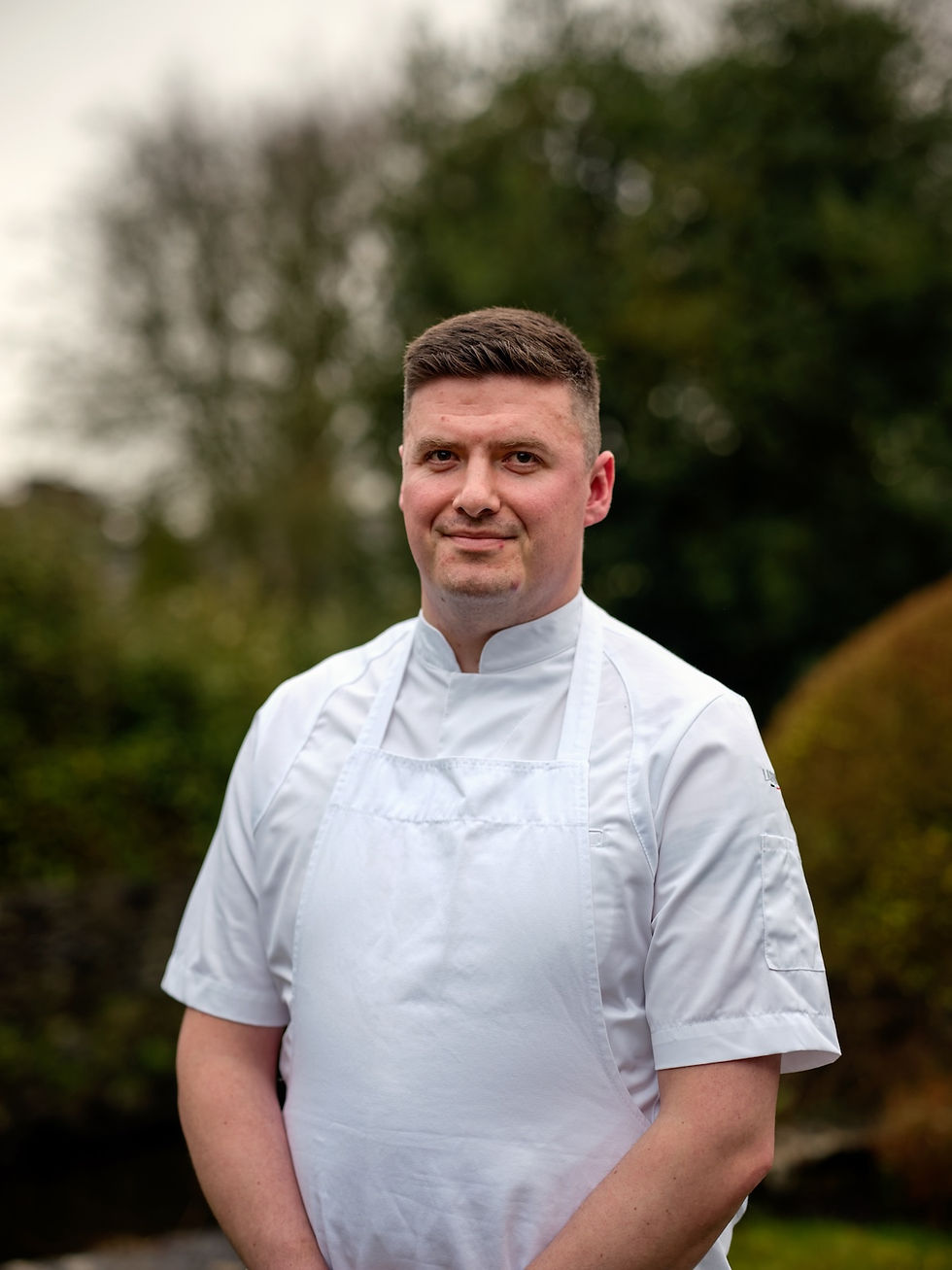
Has becoming head chef at Our Farm changed the way you think about cooking compared with your time leading Rogan & Co?
I’d like to think that the ethos Simon has instilled in us, the focus on produce, respect for ingredients and the seasons, is the constant throughout my time here. However, transitioning over to the farm full-time has reinforced these values and heightened my passion and understanding of growing, and a wider appreciation for horticulture as a whole. The link between where food comes from and what it takes to get it from the farm to the table has never been so important to my cooking.
When a new crop is ready for harvest, what happens first? Does the ingredient dictate the dish, or do you already have ideas waiting for the moment nature catches up?
It all depends on the crop. Some are grown with a clear purpose from the outset, while some are less planned. We grow cabbages every year because they thrive in our climate, and before they're even planted, we know that most of the harvest will be fermented and used later in the season.
Other crops are more experimental. Take celtuce, for example, a variety of lettuce grown for its thick stem rather than its leaves. We'll harvest a small amount and hand it over to the chefs, who will experiment with different techniques and flavours. Those trials often evolve into a new dish, or an element of one, that eventually finds its way onto the menu at one of our restaurants.
You've become affectionately known as the group's 'Pickle Prince'. Preservation has gone from an old-world necessity to one of modern gastronomy's most exciting techniques. What still surprises you about fermentation, pickling and ageing ingredients?
Even though preservation has become a new, exciting technique, we very much view it as a necessity. Our ability to showcase Our Farm throughout the seasons is essential, and techniques such as fermentation, pickling and dehydrating allow us to do that. Ultimately, the flavour is what still surprises me even to this day. It’s a flavour profile that is unique, and there is something nourishing about eating these kinds of foods, as if your body is thanking you.

Some of the most memorable dishes from Simon Rogan's restaurants are built around ingredients many chefs might overlook. What humble British ingredient do you think still isn't getting the respect it deserves?
For me it’s cabbage. I think it’s really underrated. If prepared correctly, it can be one of the most delicious ingredients that we can grow in this country. Grandmas from years gone by have left a generational dislike for cabbage. However, a simple roasted piece of brined cabbage, in my opinion, can stand up to any steak or protein for that matter.
Do you have a favourite vegetable, herb or fruit to grow and cook with?
I think herbs in general are fantastic to grow and cook with. They are relatively easy to grow so you can do it at home in whatever space you have available, and they can elevate simple dishes, and pack loads of flavour into a dish with very little effort. More unusual herbs like lemon verbena, Pineapple sage and Apple marigold are fantastic as well. They allow us to bring tropical, exotic flavours to our cooking without having to import fruits from overseas, ultimately keeping our carbon footprint down. If I had to choose one, it would be Apple marigold. It’s something I had never come across before starting here, and I still remember how it blew my mind the first time I tried it.
How much do daily conversations with growers influence the menu, and can you remember a dish that only existed because of something unexpected happening in the fields?
The communication between the growers and chefs is vital to everything we do. The chefs can come down whenever they need to and, in most cases, hand-pick exactly what they want without having to rely on suppliers thinking they know what they want. We have done this long enough now to know what standards are expected in the restaurants. We have weekly meetings with all the Head Chefs to discuss what’s available, what’s coming into season and who is using what. Between myself, Adam (head grower) and Paul (executive chef), we have regular walks round the farm to discuss the produce and plans, and then relay this to the teams accordingly. We have become quite good at adapting throughout the season to combat crop failures or pest problems. The cucumber preserve that we use in the restaurants and sell online came directly from a glut of cucumbers we had one year. This is now a staple we make every year. Things like this are what keep it exciting and interesting. Each season is different to the last with its own unique obstacles to overcome.

Do you think British fine dining is becoming more exciting because chefs are choosing to cook with ingredients found closer to home?
I think the British food scene is exciting because of the fantastic array of producers and purveyors all over the country. Whether it’s a fantastic cheese maker or a farmer that rears incredible beef, an organic vegetable grower or a wonderful day boat fisherman. All these things combined with a vast number of talented chefs in this country willing to harness what’s on offer puts British gastronomy at the very top.
You've spoken before about wanting to change attitudes towards British food culture. If you could get every young chef in Britain to adopt just one habit in the kitchen tomorrow, what would it be?
I think attitudes towards British food culture have changed in recent years. It’s about continuing to push towards and inspire and educate the next generation of chefs to continue to grow British food culture. If every young chef was given the opportunity to learn about where food comes from and that the high standards and methods of working begin before the produce enters the kitchen, it begins as soon as the seed enters the soil.
Which ingredients would surprise people most that you have successfully fermented, dried or preserved?
One of the things that surprised me the most was fermented courgette juice. We were looking at some different uses for the abundance of courgettes we have every year and found that the liquid collected after the fermentation process has the same acidic properties as lemon juice. We now use this as a replacement for lemon juice for finishing sauces.

Has the uncertainty in climate and/or seasonality made you a more instinctive cook, or does it simply demand an even greater level of planning behind the scenes?
We have noticed in recent years that each season is vastly different to the last. Whether that be the unpredictable climate, pests or general running cost increases. This means we have to adapt and be able to make changes whenever required in order to continue providing produce for the restaurants. We make detailed crop plans at the start of each year, along with plans for what to do in case of emergencies based on things that have happened in seasons gone by. Ultimately, this is down to Adam and the farm team with their ability and knowledge to spot the issues early to make changes whenever required.
You've spent more than a decade within Simon Rogan's world. Looking back, what's the biggest lesson you've learned?
The biggest thing I’ve learnt in my time here is a deep appreciation for nature. Whether it’s foraging or growing produce on the farm. The high standards that are required start long before the produce enters the kitchens. Working with nature instead of against it always produces better results.
If someone sat down at an Our Farm table having never experienced Simon Rogan's philosophy before, what single dish would you serve them to explain everything the farm stands for, and why?
If I were to serve one thing, it would be the "Aynsome Offering" that features on the menu at L’Enclume every season. It’s a snapshot of everything that’s at its peak at that particular moment and perfectly showcases our ethos and produce.


