
From Wild Garlic to Baked Alaska: A Conversation with Head Chef Charlie Crote, Constance

From looking after chickens and birthing lambs in rural Gloucestershire to training under John Williams at The Ritz, Charlie Crote’s relationship with food has always been rooted in respect for ingredients. After working alongside Patrick Powell at Allegra and leading the kitchen at The Midland Grand Dining Room, he now heads up Constance at Fulham Pier, working alongside Culinary Director Adam Byatt.
At the Thames-side restaurant, Crote is breathing fresh life into British classics, drawing inspiration from Constance Spry while letting the seasons dictate what comes next. He talks to The Knife about wild garlic and hedgerow berries, the foundations he learnt at The Ritz, tableside theatre, reinventing the classics and why ultimately he’d simply like to be remembered as "a nice guy, cooking nice things, surrounded by nice people."

You grew up around the farming community in Gloucestershire. How much does that still shape the way you think about ingredients today?
It gave me a new-found respect for produce. I had my own field of chickens that I used to look after, I’ve birthed lambs and it showed me that the respect and care you show the animals and the produce ultimately helps with the quality of the final product. I also got to see the hard work, care and passion the farmers gave to their job, and it’s inspiring. There was also the access to wild food and being able to go out and simply pick; the woodlands around where I grew up were filled with wild garlic in the spring, the hedgerows were full of berries during summer and early autumn, it all helped give me a really grounded perspective on the incredible produce we have available to us in the UK, and understanding of when food it at its best.
Your London career started at The Ritz under John Williams. What did that kitchen teach you that you still carry with you now?
It taught me everything I needed to know; from the seasons to the produce to actual cooking. The respect for comrades, everything about leadership, the camaraderie of a team that pulls together to go in the same direction. It was ultimately the greatest fundamental training I could get, without even knowing it (in the moment).
You then worked with Patrick Powell at both Allegra and The Midland Grand Dining Room. What did you take from those two very different restaurant openings?
Allegra was a totally different cuisine compared to the Ritz – it was more modern and used totally different techniques to what I was used to, such as Asian techniques. I joined Patrick's team at Allegra as a Chef de Partie and within a few months became Sous. The relationship with Patrick across the four years I was there was really great and I learnt a lot. At that point we had the opportunity to open the Midland Grand Dining Room where he asked me to run the kitchen as Head Chef. We decided to focus the menu on our roots and use our classical French training and base the menu on classic French brasserie dishes. We felt that that took us both back to where we were trained; it was more comfortable to write, design and cook menus in the style. There was also the added element of the room to consider. It was very grand and sort of theatrical, which helped us really have fun designing a menu that would suit the space.
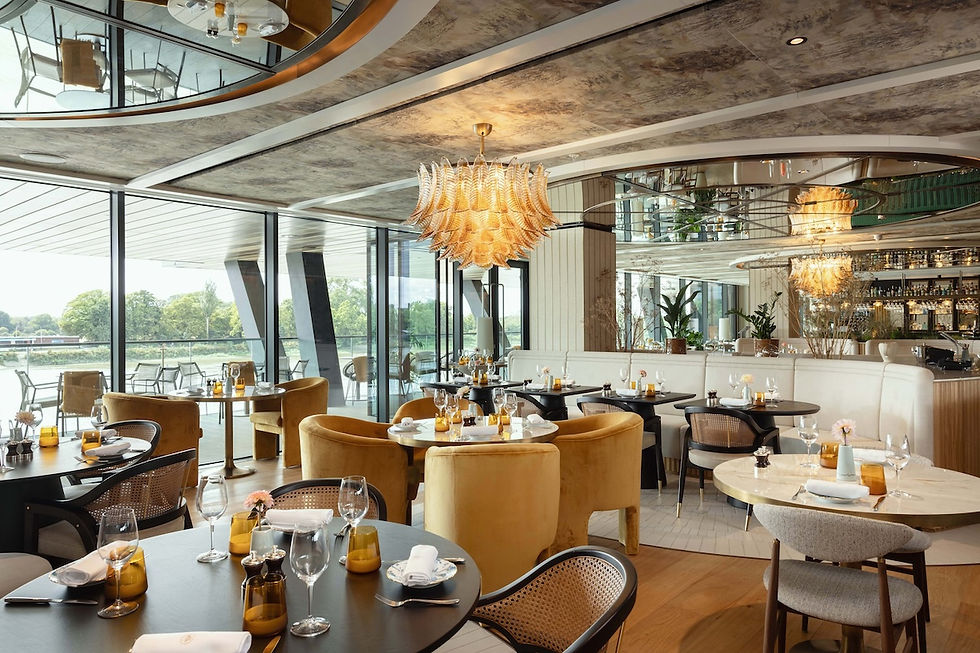
Constance is built around British classics, but without feeling old-fashioned. Where do you draw the line between respecting a classic and making it your own?
As chefs, part of your training is to know and respect classic dishes, what you can and can’t change. Classics are classics for a reason. But there are certain things you can do. The menu at Constance is a great example of taking old classics and giving them a fresh lease of life through the use of modern ingredients, techniques and how we now interpret dishes from the past. One of my favourite examples of this is our Baked Alaska – it’s our interpretation of the original and now it’s one of the most popular dishes on the menu today.
Is there one dish on the Constance menu that feels most like your cooking?
It has to be the Coronation Chicken Pate en Croute.
The restaurant takes inspiration from Constance Spry, including dishes linked to her culinary history. Has researching her changed the way you look at British food at all?
It’s been really exciting looking back and researching what Constance Spry did and finding fun (and some not so fun dishes), and seeing how we can use those ideas and principles in our restaurant. We’ve recreated a lot straight from her book – some successful some not, with the obvious success being the steady influence of her Coronation sauce throughout a few of our dishes. Whilst a lot has changed, a lot of the fundamentals and basic principles remain the same – even 70 years on!

There’s quite a bit of theatre at Constance. How important is that sense of occasion to you?
We wanted to nod to and pay respect to the theatre of the table-side element without it feeling too formal. The theatre brings a sense of fun to our restaurant and really helps our front-of-house team connect in a different way to our guests. The Baked Alaska really heroes that sense of fun and occasion, it has that childlike sense of excitement to the presentation – a big marshmallow-y meringue covered dessert wheeled to the table with all the little toppings, jelly, chocolate shards, sauce and whipped cream added in front of you. And you can see by our guests' faces how excited they get when they see it coming.
The clay pot chicken with barley and beer has become one of the restaurant’s signatures. What’s the story behind that dish?
Adam wanted to create this really British dish, and he himself says this dish is a riff on Nigella Lawson’s Chicken Orzo dish. It’s comforting, simple but indulgent, and it encapsulates everything we want to do at Constance. It’s taking simple, store cupboard ingredients, and making recognisable food that people just enjoy eating.
You’re working under Adam Byatt’s guidance, but also leading the kitchen yourself. How have you gone about finding your own voice within that relationship?
Adam is very good at letting me lead and [having] own my own space, and is very much a mentor and a sounding board for my thoughts and ideas.

When a great British ingredient comes into season, what normally happens first: does the produce suggest the dish, or are you already looking for something to fill a gap on the menu?
The produce suggests the dish, always. Different cooks in the kitchen will suggest ideas, I’ll have my ideas, Adam has his and there’s this sort of beautiful, natural way of it coming together and finding its place within the menu.
Constance sits right on the Thames as part of Fulham Pier. Does the location influence the food more than people might realise?
The location provides us a lovely environment for us to work in. To look out the pass and onto our view, seeing the seasons change definitely gives the team inspiration and a spring in our step, so whilst it might not directly influence the recipes and the ingredients, it’s such a lovely space to be in, it helps the team cook better. I don’t think there's a kitchen out there that could rival the view we have.
You’ve already worked in some pretty formidable kitchens. When you look ahead now, what kind of chef do you ultimately want people to recognise Charlie Crote as?
Just a nice guy, cooking nice things, surrounded by nice people.


