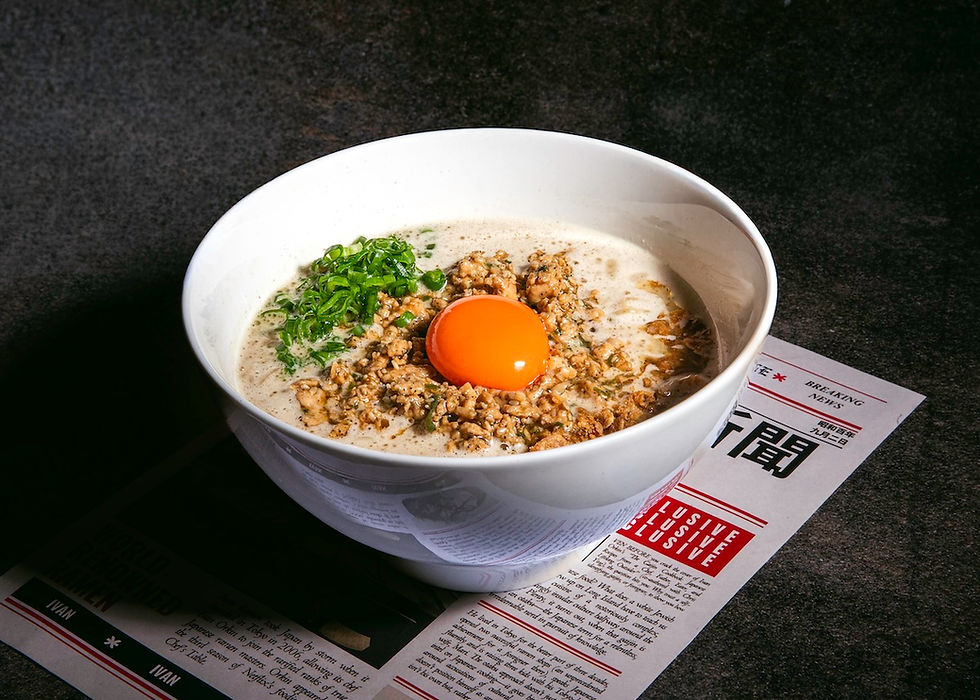
An invisible energy within ingredients: A conversation with Executive Chef Leo Tanyag, MA/NA
- James Massoud

- Apr 7
- 3 min read
Updated: Apr 10
MA/NA opens in Mayfair this month and promises to be one of London’s most ambitious new Japanese dining destinations. Led by Executive Chef Leo Tanyag – whose résumé spans OKKU Dubai, Los Mochis and London’s sought-after omakase rooms – the restaurant will be built around the philosophy of mana: the invisible energy that exists within ingredients.
In this exclusive conversation with The Knife, Tanyag discusses precision, restraint, and why something as humble as rice can carry the soul of a dish.

MA/NA is built around the idea of mana – an invisible energy within ingredients. How do you translate a spiritual philosophy into something a guest can actually taste or feel on the plate?
For me, mana isn’t something you explain, it’s something you experience. Temperature, texture and pacing do far more than words ever could. A warm bite followed by something cool, a moment of stillness between dishes, the way a flavour lingers or disappears quickly, all of that communicates energy. When everything is in balance, guests feel it instinctively.
You’re moving from LA-style Nikkei energy at Los Mochis and the intimacy of JUNO and LUNA Omakase into a 156-cover dining room in Mayfair. How has your cooking evolved to meet that scale without losing precision or soul?
Scale forces clarity. My cooking has become simpler, more confident and more disciplined. It’s about repetition done perfectly, flavour balance you can trust every time. Precision and soul aren’t opposites; when they’re aligned, simplicity becomes powerful.

The menu celebrates "quiet mastery" of Japanese technique. Which technique or process most defines MA/NA’s identity, and why?
For me, it’s personal technique, originality rooted in deep respect for tradition. We focus on clean execution, playful ideas and flavours that really hit. Everything is intentional, but never heavy. The goal is food that feels effortless but unforgettable.
You’ve created dishes described as "moments in their purest form". Can you share an example where a tiny detail transforms the experience?
The Hamachi Onigiri is the clearest example. It’s where tradition meets innovation. A small adjustment in seasoning, temperature or texture completely changes how the dish lands. It looks simple, but that final detail is everything.

MA/NA’s food and bar programs move in one seamless rhythm. How closely have you worked with Pietro Collina to align flavour, mood and pacing?
Very closely. Every pairing is designed to balance and cleanse the palate rather than overpower it. The drinks don’t compete with the food, they support it. That rhythm is what keeps the experience flowing naturally from start to finish.
Your career spans OKKU Dubai to some of London’s most sought-after omakase rooms. What did those experiences teach you about creating a true dining destination?
They taught me that food and atmosphere must carry equal weight. With MA/NA, the goal is to honour tradition while introducing a modern perspective, reimagining the meeting point between heritage and innovation. It’s about creating a place people remember emotionally, not just technically.
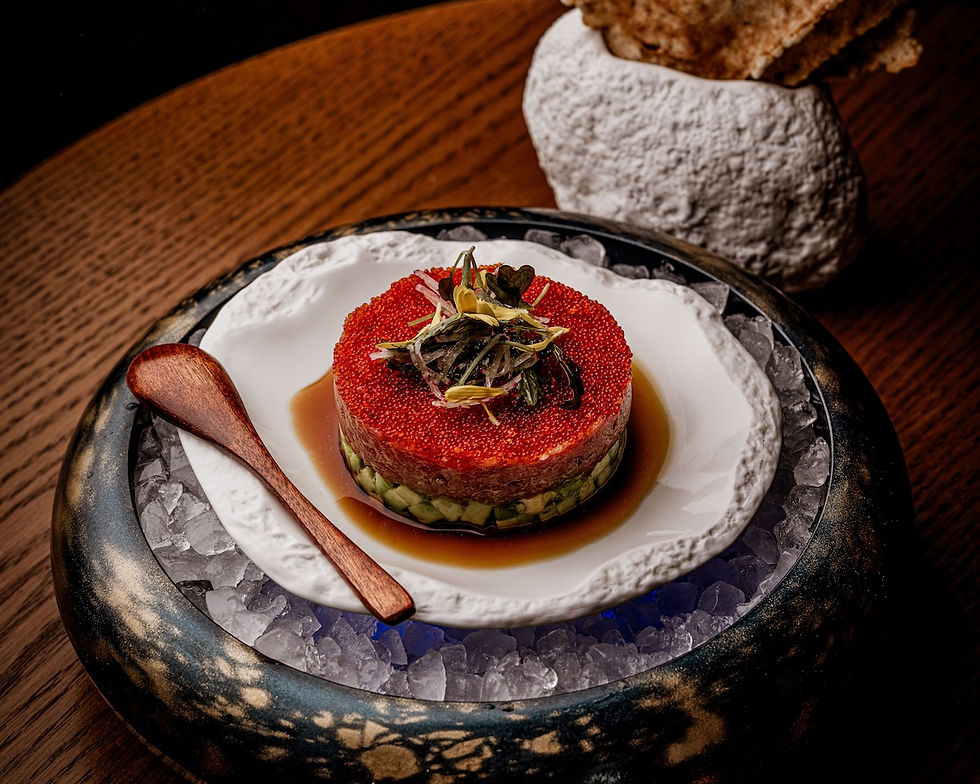
Is there an ingredient on the menu you think diners often underestimate?
Rice. When treated with the same care as fish or protein, it becomes the soul of a dish. I’m excited for guests to really notice it.
MA/NA feels built for different moods: dinner, late-night, or something in between. How did you design a menu that flexes with the room’s energy?
It’s all about structure. Dishes can be enjoyed lightly or layered into something more indulgent as the night deepens. The menu adapts without losing its identity, just like the room itself.
Markus Thesleff calls MA/NA a "celebration of ritual". From a chef’s perspective, what ritual will define it over the next decade?
At its core, it’s about elevating a single ingredient, honouring it, challenging it, and presenting it in a way that feels both respectful and new. Every dish carries a personal touch. I want my family to be proud when they taste it. Markus and I believe food should be bold, playful and full of energy, something you genuinely enjoy, not just admire.