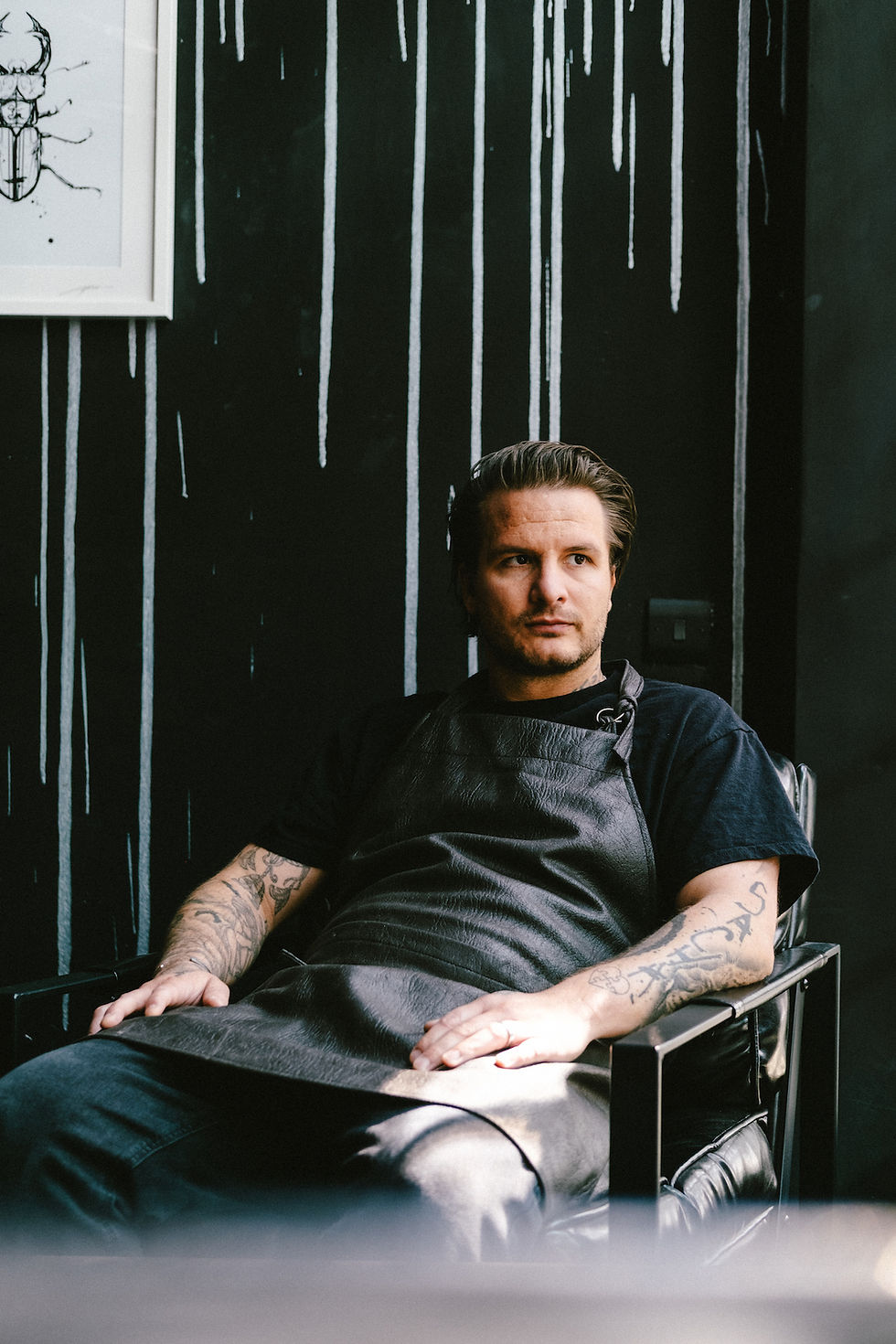
A Rooftop Reimagining: A conversation with Chef Director Greg Lambert, SIX Rooftop at BALTIC

At Six Rooftop at BALTIC in Gateshead, Chef Director Greg Lambert is crafting more than just seasonal tasting menus – he’s creating edible memories. From seaside childhood picnics to modern plant-based takes on Cacio e Pepe, Lambert’s dishes are built on emotion, nostalgia, and North East provenance, served with polish in a glass-walled space overlooking the Tyne. As Head Chef, he’s leading the charge for a new kind of dining, one that’s elegant yet playful, refined but rooted in experience. This summer, The Knife caught up with him to talk storytelling menus, Chef’s Table culture shifts, and why Six is his most personal kitchen yet.

Your menus at Six Rooftop at BALTIC place a real emphasis on seasonality and nostalgia. What’s your process for translating personal memories into modern, elevated dishes?
It always begins with a memory – sometimes mine, sometimes one shared by the team – usually linked to a time of year, a particular flavour, or a strong emotion. It could be as specific as the smell of hot dogs outside the student union or a school dinner classic that evokes a certain feeling. From there, we interpret that moment using modern techniques and refine the presentation so it suits the occasion-driven, polished style of Six. It’s crucial that the memory isn’t just personal, we want guests to recognise it, too. That recognition brings a special kind of joy.
Your 'Taste of Six' menu feels playful and nostalgic but also elegant and contemporary. How do you strike that balance?
We’re careful not to lose the essence of a dish. It’s about reimagining classics or nostalgic moments with premium ingredients and fresh presentation. That way, the soul of the dish remains familiar, but the experience feels new and exciting, something that sparks both memory and curiosity.
North East provenance seems central to your cooking. Which local suppliers or ingredients are essential to your menus?
We're spoilt in this region. Just 20 minutes downriver, we’ve got the fish quay – our go-to for fish and shellfish. Game comes from local estates, where gamekeepers hand-select for us. Our honey is from Adrian’s Wall, and a lot of our herbs come from Chesters Farm in Northumberland. These ingredients aren’t just local; they bring real flavour and nutritional integrity to every dish.

What have you learned from the immersive Chef’s Table experience that now informs your broader menus and service style?
Post-COVID, we’ve seen a shift. Diners aren’t just here for food, they’re here for a complete experience. They stay longer, they spend more, and they want stories with their supper. Our Chef’s Table allows for real-time interaction: diners watch the food being plated, meet the chefs, hear the stories. That intimacy – and the emotional connection it fosters – feeds into how we now approach every service, not just the Chef’s Table.
Is there a specific dish on the current menu that channels your own childhood or upbringing?
Absolutely. We’ve got canapés inspired by childhood seaside picnics with my grandparents; things like sausage rolls, scotch eggs, cheese and pineapple sticks. We’ve reimagined them in delicate, modern ways: a quail scotch egg, a pineapple-cheddar canapé, even a crab 'Cornetto'. We serve them as a playful picnic at the start of the tasting menu, and the look on people’s faces when they recognise the references – it’s brilliant.
How far in advance are you planning seasonal shifts, and how do you handle those unpredictable short gluts or late arrivals?
We plan our menu changes monthly, which gives us just the right amount of flexibility. It lets us respond quickly to ingredients that have short peak seasons – like wild garlic or early asparagus. The tasting menus require a bit more development time, so we usually tweak individual elements rather than overhaul everything. But with the monthly shifts, we can keep things fresh and relevant without overhauling the entire structure each time.

The setting at Six is dramatic: panoramic views, a rooftop bar, and that glass-clad dining room. How does the space influence the kind of menu you create?
The setting definitely sets the tone. Most people who come here are celebrating something or treating themselves, so we have to match that energy with our menus. That means using premium ingredients, leaning into refined plating, and delivering dishes that feel special. First impressions matter, and so do lasting ones. The space adds to the sense of occasion, and our job is to make sure the food lives up to that.
What’s your standout dish, either current or from a past menu, and why does it stay with you?
One dish I’m especially proud of is our plant-based take on Cacio e Pepe. We roasted yeast to create an intense umami base, then built a rich, peppery sauce that really hit those classic pasta notes without using dairy. It started on the plant-based menu, but it was so popular we added it to our main taster menu too. It’s deceptively simple but deeply satisfying, and that’s always the goal.
You’ve mentioned the importance of working across multiple sections. How do you encourage that mindset in your team?
I always encourage the team to rotate through sections quickly and often. It builds empathy; you start to understand how each station supports the next, and how crucial communication is. It also knocks down egos. When a chef moves to a new section, they’re back to learning again, which keeps things fresh and creates a more agile, resilient team. Ultimately, it improves flow and efficiency.

How does Six compare with your previous kitchens in terms of creative freedom and ownership?
Six is my culinary home. I’ve been part of the business in some way since 2010. This is the kitchen where I’ve had the most creative freedom and responsibility, and I’ve been lucky enough to guide its direction for years. It’s very personal to me, every menu feels like a reflection of my journey as a chef.
How do you manage the performative side of the Chef’s Table while maintaining the consistency and precision that fine dining demands?
We don’t "perform" in the traditional sense, we just work as if we’re always on show. That mindset creates consistency whether guests are watching or not. We’ve also intentionally moved away from old-school kitchen culture; there’s no shouting or ego. Just a focus on professionalism, communication, and delivering great food in a calm, composed way.
What are your ambitions for the future of Six? Any new formats or accolades on the horizon?
We’ve just secured our second AA Rosette and a Michelin recommendation, which we’re proud of. Our next goals are a third Rosette and further Michelin recognition. We’re also in talks to host guest chefs, including some Michelin starred talent from Cumbria, and we want to keep pushing creatively. But above all, we want to keep the momentum going, keep diners coming back, and build something with longevity. That’s what really matters.