
Hyper-Local Philosophy: A conversation with Chef Pankaj Sharma, Syah

Chef Pankaj Sharma has spent years travelling across India to understand the country’s deeply regional food culture; from foraged ingredients and indigenous grains to the traditions that shape how communities cook and eat. That curiosity now finds its clearest expression at Syah, his farm-to-table restaurant in Udaipur, where local produce, collaboration with growers and artisans, and a progressive culinary mindset come together to create a dining experience that is both grounded and forward-thinking.

How did you become a chef?
Cooking has always intrigued me, even when I was a child. I kept looking for opportunities to cook at home. So when the time came to choose a career, I decided to learn and study more about food. This made me take up a formal course in culinary and hospitality school and that's how I became a chef.
What and who inspired you to take this up as a career?
I would say both my mother and father inspired me to take up cooking as a career. My mother has always used hyper local ingredients (and many of these used to be foraged) to create everyday soul satisfying food. On special occasions and festivals, my father used to cook his own delicious recipes. These small acts and moments of joy in our family kindled my interest in cooking.
How are you bringing about innovation in food at Syah?
Innovation in Syah comes through the amalgamation of academic collaboration with people and society ( for the knowledge of food culture and ingredients), sourcing collaboration with the producers and growers, and our knowledge of culinary and hospitality. We keep researching, studying and cooking to create our menus.

What are some local ingredients you use at Syah?
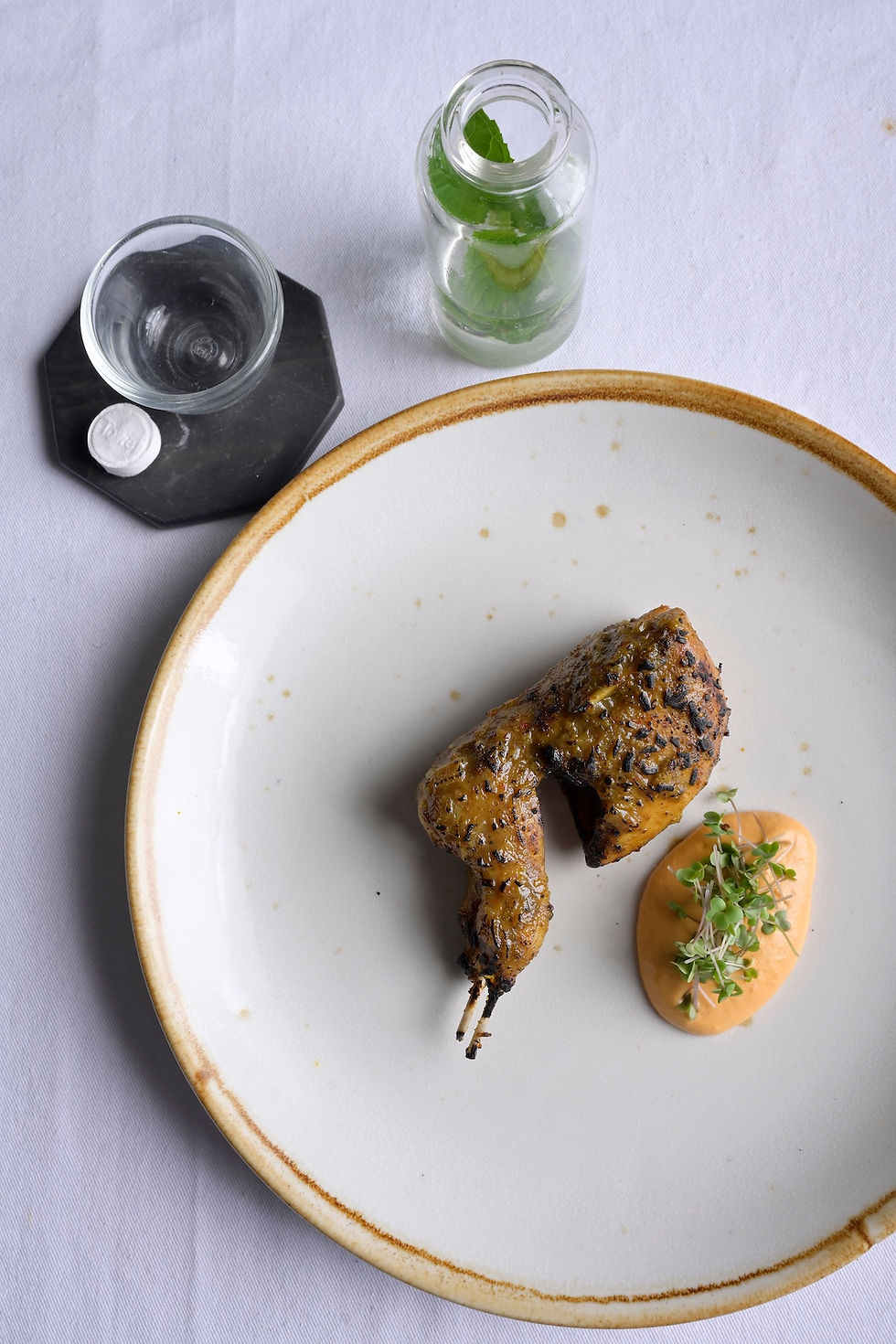
Camel milk cheese, acacia tree resin, millets, wild jujube, flowers of Kacnaar (mountain ebony/ camel's foot), palash (flame of forest), weeds like cheel (wild amaranth) and chick weed, kachara, khejri, kair and kumath.
How is the market for tasting menus in smaller cities in India?
The straight answer to this question will be the market isn't encouraging in smaller cities for tasting menus. However, another question to be asked is: Why did we open in a small city like Udaipur? We did that because Udaipur sees an inflow of a healthy number of travellers who are exposed to such dining experiences. This inflow of experienced diners made us confident about our business venture.
What does it take to make a tasting menu work financially?
The Tasting Menu Restaurant has to work like any other profit making industry: Great product value proposition, controlled over heads and a happy team with enough authority to make their decisions.
Why not launch in a big city?
If I find a good theme to offer to the city, and if the rental and overheads make sense to our business model, I shall open.
What has been the response to integrating local ingredients in your food so far?
It has been encouraging and that's why we have been honing it further for almost half a decade. Travellers and locals, both have liked and appreciated our offerings.
What are three trends you are seeing in the market for tasting menus in India?
I am not an expert at predicting trends, but I can tell you about the three points that me and my team have been working to manifest in 2026: a) Learn and project the food and eating habits of tribal and indigenous people of our immediate location; b) Involve artisans in the entire process of making and serving food; c) Integrate tangible pieces of history and culture (information of fabric, pottery, building) in food presentation.
How do you de-stress in the kitchen?
By drinking water and keeping quiet.
What’s your favourite chef-related movie?
The Hundred-Foot Journey.
What’s your goal with Syah over the next five years?
I aspire to make Syah into an institution where people come to learn about the culture and food habits of Udaipur and its surrounding region through the food that they eat. I aspire to make Syah a place where people come to understand and appreciate the connection of locals with the immediate nature around them. I aspire Syah to showcase how small and simple moments from daily life can be taken and transformed into something progressive and cosmopolitan.


