
Inside Scotland’s Most Personal Michelin Starred Restaurant: A conversation with Head Chef Tom Tsappis, Killiecrankie House

Just weeks after earning its first Michelin star, Killiecrankie House has become one of the UK’s most fascinating destination restaurants. Hidden in the Perthshire Highlands, the 12-seat restaurant from Tom and Matilda Tsappis blends Scottish produce with Japanese influence, intimate hospitality and a fiercely personal point of view.
In conversation with The Knife, Tom discusses building a restaurant far from the traditional dining circuit, cooking with restraint, life after Michelin recognition and why success means creating the kind of place they would want to visit themselves.
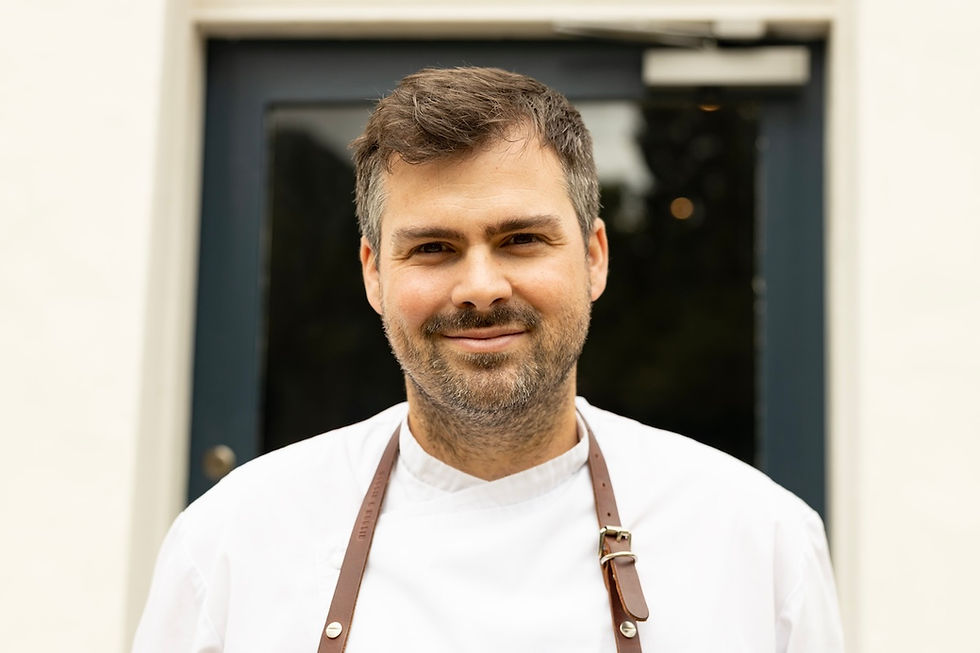
Killiecrankie House feels almost deliberately removed from the traditional restaurant circuit. What convinced you that a 12-seat restaurant in the Scottish Highlands could work as a serious culinary destination?
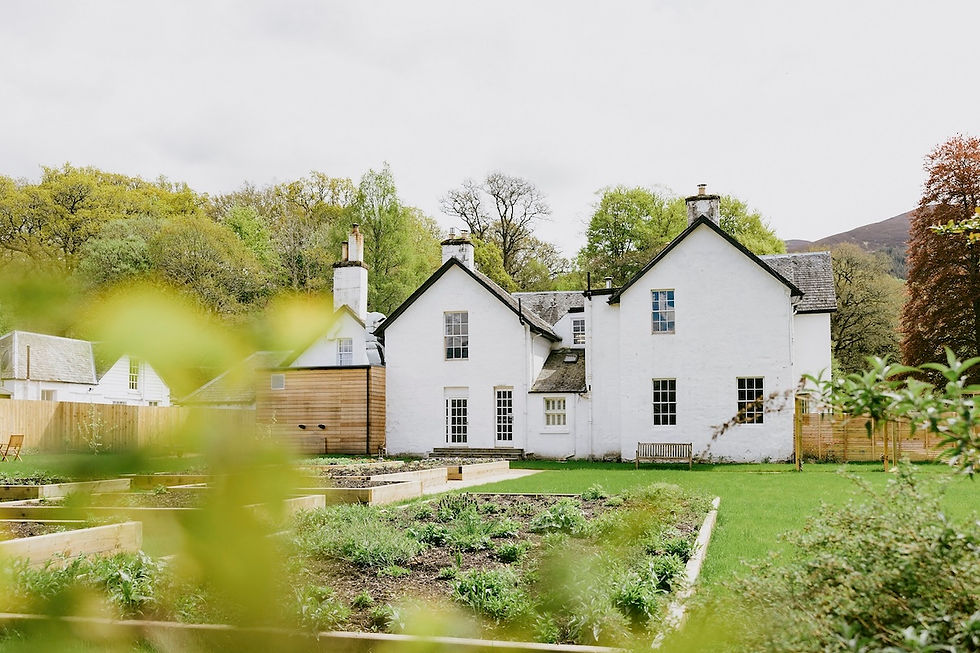
I am not sure there is a 'traditional restaurant circuit'. Sure, we are not in a major city, but then nor are The Fat Duck, Waterside Inn, L’Enclume or Moor Hall, for example – and those restaurants have proved that people in the UK are willing to travel for exceptional culinary experiences. Saying that, at no point did we sit down and have a conversation about whether or not we thought Killiecrankie would work, we were drawn to the beauty of the area, and felt that the building could be configured to put some of our ideas into action; space for a kitchen garden, bedrooms, an intimate yet not cramped dining room with views of an open kitchen. The whole project was born out of the idea of the kind of restaurant we would like to visit; the hope was that there are enough people like us out there to make it sustainable.
You’ve spoken about how Japanese techniques shape the way you cook Scottish produce. How do those influences show themselves on the plate without the food feeling overtly "Japanese"?
I think sometimes the food does feel overtly Japanese – and that is perfectly fine – but we are not a Japanese restaurant, and so in the cadence of the menu, there is always a push and pull between flavours and preparations that feel more Asian, and those that feel closer to home. If we take something like the breadth of Scottish seaweeds, these are ingredients that are widely used in Japan, and so the preparations might feel more Japanese, but we try to introduce them to people alongside more western flavours – potatoes, for example. The reverse is also true: game is less prevalent in Japan than here, so if we are preparing venison, then we would try to show it alongside flavours like soy and umeboshi, to reframe a familiar ingredient in an unfamiliar way.
The garden clearly plays an important role in the restaurant. How much of the menu is shaped by what you’re growing yourselves, and does that change the way you think about seasonality?
Our menu is constantly in flux. We are driven by what is coming in (and out) of season, and work with our kitchen gardener Clive to plot and plan our menus accordingly. We change, on average, one or two things a week on the menu, with this being less frequent in the winter and more so in the summer. It keeps things interesting for the kitchen and also means that there is an incentive for people to return multiple times a year, which in our rural location is so important.
Before opening Killiecrankie House, you worked in Michelin starred kitchens like Aquavit and Man Behind the Curtain. What lessons from those environments have stayed with you, and what did you deliberately leave behind when creating your own place?
To be clear, I have never 'worked' in Michelin kitchens; in fact, I have never worked in any kitchen prior to Killiecrankie House. I spent four days each in Aquavit and Man Behind The Curtain as part of a stagiaire – a work experience role largely based around doing small bits of prep and observing the chefs. It would be unfair to those restaurants to say this is what I kept and this is
what I jettisoned from the way they were working, as it simply isn’t true. The way that we operate at Killiecrankie is largely based on trial and error and feeling out systems that work for us.
The restaurant has just 12 seats and a very small team. How does working at that scale shape the kind of experience you want guests to have?
Well, first and foremost, it is a personal experience. There is interaction between the guests and every person that works here, and we operate with an informality that is sometimes unusual in starred restaurants. That’s not to say that the staff here aren’t informed or knowledgeable in their own right, but we deliver information, be it about food or wine, in a way that feels accessible to each guest. Personally, I believe that if you are going to enjoy spending an evening somewhere, you should be made to feel as comfortable as possible, and for me, the kind of forced formality that sometimes appears in high-end restaurants I find a bit off-putting. Eating out is meant to be fun, isn't it?
Your path into cooking wasn’t entirely conventional; from finance to retraining as a chef. Looking back now, do you think that circuitous route changed the way you approach the profession?
I am sure that if I had come up in restaurants, then the style of food I cook would be more rooted in classic French technique than it is, but as I am largely learning as I go, there is a freedom to the kind of food we cook here. We pursue ideas that I think others might not have, just because we are interested in them, and I think that has given the menu a real point of difference.

You’ve said that you were never really "working towards" a Michelin star. When the announcement finally came in Dublin, what went through your mind in that moment?
I’m not sure anyone is working towards a Michelin star, although everyone would like one. If you set out with the sole aim of getting a star, then I suspect the restaurant you open would end up being a kind of homage to someone else's. You have to have a viewpoint as to what kind of experience you want to offer and then work every day to refine it. Saying that, we are, of course, delighted with the star! I think the overwhelming feeling when they called us up was relief – I had spent most of the month since we got the invite to the ceremony convincing myself that we were only there to make up the numbers. It also felt nice to prove to our parents that maybe Killiecrankie House hadn’t been such a crazy idea after all!
How, if at all, has the star changed life at Killiecrankie House, both practically in terms of demand and psychologically for the team?
Everything has changed, and also, day to day, not a great deal. Of course, bookings are up, which is great, but it does mean our small team is feeling very small right now. Recruitment is in full swing, which is probably the biggest problem we are facing currently – getting the right people in is not easy and takes time.
The Highlands have traditionally been associated with grand hotel dining rather than intimate destination restaurants. Do you feel part of a broader shift in Scotland’s culinary identity?
I am not too concerned with trends to be honest, and actually I think the Highlands aren't still known for grand country house hotels; we just got a Michelin star, but so did The Torridon which is a much larger, more traditional operation than ours, so it’s not to say that that style of cuisine or establishment is disappearing, or less popular than it was. I think for us, we are creating the
kind of restaurant experience that we would like to come and dine at ourselves, and even if it feels like an outlier in Scotland’s current dining scene, I hope that when people look at what we are doing, it encourages them to pursue their own ideas for Highland hospitality, whatever they may be. There is no set formula for success, and I believe that having an identity as a restaurant is incredibly important.

Your cooking often combines precision with a sense of restraint. When you’re developing a dish, how do you decide when something is finished?
Most of our dishes are an investigation of a single ingredient or idea. If we are serving, say, asparagus, as a star ingredient for a course, then all of the other ingredients on the dish are there in service of the asparagus – to highlight, and season and contrast with it. I do not feel the need to add carbohydrates to a plate to fill it out, or green vegetables, so that it looks 'complete'. A dish is finished when we feel that there is nothing more that we can add to the conversation - there is no point having a dish with 15 textures of asparagus if they all taste the same. There is such a thing as a course being overworked, sometimes a plate benefits from the chef doing less.
You and Matilda run the restaurant very much as a partnership, with food and wine evolving side by side. How closely do those two sides of the experience inform each other?
I think in any restaurant they run in tandem, but we are also married and live onsite at the restaurant, and spend every day working together, so our thoughts and feelings about the offering tend to be pretty well-aligned. We currently offer four pairings at the restaurant, and each has to marry into the food. That can affect the cadence and structure of the menu, and means that both FOH and BOH staff are constantly adjusting and tasting to make sure that, taken as a whole, the food and beverage offerings are harmonious.
Looking ahead, do you feel a pull to expand or is the ambition for Killiecrankie House to remain something deliberately small, personal, and slightly off the beaten path?
We have big plans and small pockets, so all of our changes here take time. Saying that we have no intention of branching out to other projects. Killiecrankie House is our long-term focus with plans for the development of the site here. Whatever happens, though, it will remain a small business; the intimacy and personal interaction are part of the experience, and I think it would be a mistake to jeopardise that. Hopefully, we are no longer considered 'off the beaten path', our intention was always for Killiecrankie House to become a destination in its own right, and I think we are starting to make that happen.


