
"Nature Should Always Dictate the Menu": A conversation with Executive Chef Jack Hazell, Restaurant Isca

When Jack Hazell took the reins at Restaurant Isca at Borde Hill in West Sussex, he inherited more than just a kitchen. Overlooking a thriving biodynamic walled garden, Isca is a restaurant where the menu begins in the soil, with ingredients harvested just metres from the pass and shaped by the rhythms of nature rather than the calendar.
In this conversation with The Knife, Jack discusses why respect for British produce matters more than ever, how magnolia became one of his most exciting ingredients, the realities of cooking with unpredictable harvests, and why, despite any Michelin ambitions, a dining room full of happy guests will always be the greatest measure of success.
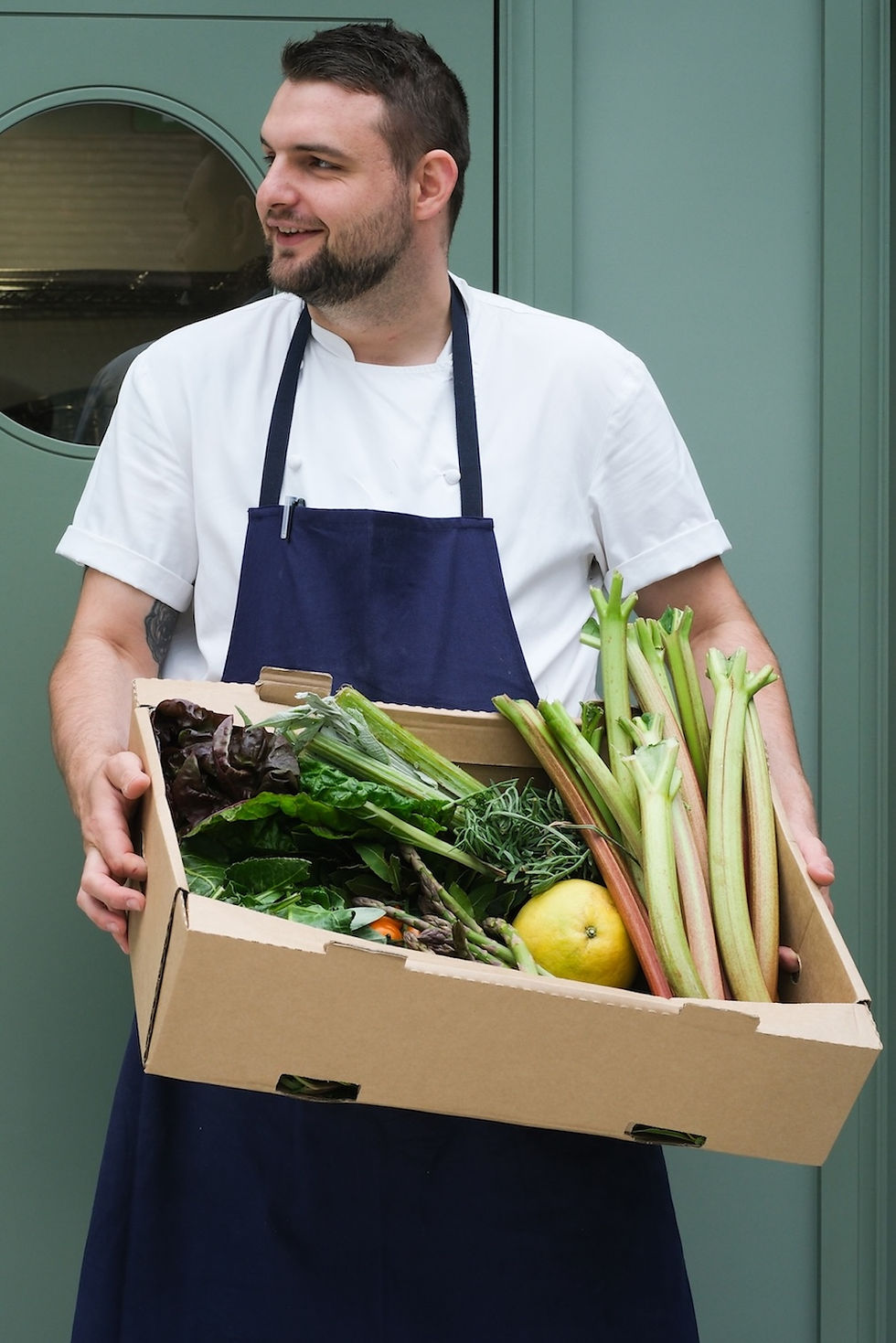
Most chefs talk about cooking seasonally, but at Isca it sounds as though the garden is dictating the menu almost hour by hour. How much creative control are you actually willing to hand over to nature?
We are lucky enough to see produce actually growing in the garden day by day, so we have a certain amount of time to plan things, however some things do sneak up on you! The food we serve and eat in restaurants should always be dictated by nature.
The phrase "bringing the garden onto the plate" gets used a lot, but what does it genuinely mean in your kitchen? If I ate at Isca in spring and then came back in autumn, what story would those two meals tell me?
We try to add at least one garden element to all of our dishes. Whether that be something obvious like a tomato or a courgette, or wild garlic caper. We try not to cover everything in edible flowers, which can be tempting with them surrounding us. I’d like people to take away that everything on the plate has an actual purpose and is not just a decoration.
You would absolutely be able to taste the change in the seasons. From what we grow and gather from the grounds and the estate, to the type of food people like to enjoy throughout the seasons – from lighter dishes to more comforting hearty dishes. For us, it's all about an exceptional experience no matter the season.
You've cooked in some of Britain's most accomplished fine dining kitchens, where consistency is everything. Is it liberating (or slightly terrifying) to build a restaurant around ingredients that refuse to behave consistently?
It can be slightly challenging sometimes. We are so used to having such uniform and perfect ingredients that when we get a variety of shapes and sizes it can get tricky to get a consistent product on the plate, but at the same time pushes us to think of new ways to use things. The main thing is having the best quality of produce.

Borde Hill is full of plants that most people would simply walk past. Have you discovered an ingredient since arriving here that completely changed the way you think about flavour?
We are finding new ingredients and produce quite often, so it’s really exciting to be finding uses for these. We are lucky enough to have an abundance of magnolia trees and Isca being named after one of them. When they are flowering we're trying different recipes with different varieties as they all have their own quirks; we have a delicious dish at the moment with a magnolia harissa served with the South Downs Lamb.
Your menu embraces root-to-tip cooking, nose-to-tail butchery and preservation. Is sustainability something you consciously set out to communicate to diners, or do you think the best sustainable cooking simply speaks for itself?
I think it’s important to really look into what’s actually sustainable and let it speak for itself. In my eyes the most sustainable approach is supporting UK farmers, growers and ingredient makers.
Restaurants often talk about having a relationship with local producers, but your producers are effectively just outside the kitchen door. How does that proximity change the conversations you have every morning before service?
It’s a great talking point for the team, explaining the dishes as they go down on the table when they can literally see the food growing out in the garden. We get produce from the walled garden most days at the minute and two or three times a week from the farm. While we have a rough idea of what’s coming in we have a few surprising large deliveries of things that keep us on our toes.

You've spent years mastering classical techniques under chefs like Marcus Wareing and Claude Bosi. Which technique has stayed with you the most?
The main thing at both was always respect for the ingredients. While some things need less work than others you really can't deliver a top notch dish with an inferior product.
Is there a single dish on the opening menu that sums up your philosophy better than anything else? If someone only had time for one plate at Isca, which one would tell them exactly what you're trying to achieve here?
Most likely the scallop dish. Hand dived Orkney Scallop, Curing Rebels Ndjua, Sea Beet & Milk Bread. Orkney Scallops are really some of the best scallops in the world, so showing off what the UK has to offer [is important]. Curing Rebels make some stunning charcuterie down in Brighton. Sea beet and other vegetables foraged from the Sussex coast and the Estate. And light and fluffy milk bread made by our team fresh everyday. The idea of the dish is to eat the scallop then mop up the butter with the bread. It’s a really simple dish that doesn’t take itself too seriously, but really delivers on seasonality, provenance and flavour.
The restaurant changes with the equinoxes and solstices rather than the traditional four seasons. That's a wonderfully poetic idea, but does it genuinely influence the way you think as a chef, or is it simply a different way of measuring nature's rhythm?
Sometimes I can find ingredients changing throughout the day. When the seasons change it can be quite challenging; not all spring vegetables are ready on day one of spring for example. The equinox gives us a bit more of a buffer to really allow ingredients to come into their prime. While the first tomato or cucumber is exciting for us in the kitchen they really come into their own a few weeks further into the season.

Fine dining has traditionally looked to France for technique and luxury ingredients. Isca feels like it's looking instead towards landscape, biodiversity and ecology. Do you think that's where the future of ambitious British cooking lies?
In terms of techniques, 9/10 chefs will learn the French technique but ingredients wise, it’s very important to look to our own farms and shores. We have some of the best seafood in the world and most of it is sent overseas. The same goes with meat. While we can sometimes struggle in certain months for fruit and veg produce, I would always choose an English strawberry or asparagus over its French counterpart and I think in recent years a lot more chefs are feeling the same.
When diners leave Isca, what's the one thing you hope they'll remember? Is it a particular dish, a flavour they've never encountered before, or perhaps the feeling that they've experienced the garden in an entirely new way?
Overall I’d like them to remember the experience as a whole: the ethos of the restaurant, the experience of the visit from entry to exit on the whole.
Five years from now, what would success look like to you?
Any chef that says they don’t want a sign of recognition from a certain French tyre company is lying. That being said, I think the true sign of success of a restaurant is a room full of happy customers.


